 how-to
What Should a Commercial Floor Cleaning SLA Checklist Include?
Last Updated: October 24, 2026
Quick Summary
A floor cleaning SLA checklist must define scope of work by floor type, service frequency and windows, client and provider responsibilities, payment and termination terms, measurable acceptance criteria per surface, and KPIs with inspection scoring. Set the acceptance threshold at 4 or higher per zone on a 1-5 scale, with corrective action and service credits below that.
- List each floor type separately, since stone cannot take the same chemicals as VCT.
- Write frequency as specific days and times, such as twice weekly between 6 p.m. and 10 p.m.
- Require a chemical list with Safety Data Sheets before the first service and written approval for substitutions.
- Keep periodic work like stripping and extraction on a defined cycle, priced or approved separately from routine cleaning.
- Run weekly spot checks and monthly full inspections to catch drift before it becomes a complaint.
Table of Contents
- What a Commercial Floor Cleaning Service Level Agreement Checklist Must Cover
- How to Use a Commercial Cleaning Service Level Agreement Template
- Building a Commercial Floor Cleaning Checklist by Zone
- Floor-Specific Service Standards and Method Compatibility
- Cleaning Service SLA KPIs That Actually Measure Performance
- Using a Commercial Cleaning Inspection Checklist for Quality Assurance
- Request a Floor Care Assessment for Your Property
- Frequently Asked Questions
What a Commercial Floor Cleaning Service Level Agreement Checklist Must Cover
A commercial floor cleaning service level agreement checklist is a written list of every floor task, standard, and remedy a cleaning contract must define before anyone touches a mop.
Most agreements fail on three points. They skip floor types. They leave frequency open to interpretation. They never define what "clean" means in measurable terms.
Below, we'll show you exactly what to include so your next contract holds up.
Scope of work and floor types
Scope of work is the section that names every surface, task, and area the provider will clean. Skip it, and you'll argue about who owns the break room tile.
List each floor type separately:
- Vinyl composition tile (VCT)
- Ceramic and porcelain tile
- Natural stone (travertine, granite, slate)
Each surface needs its own method. Stone cannot take the same chemicals as VCT. Carpet needs extraction, not mopping. Write the method next to each floor type.
Schedules, frequency, and service windows
Service frequency turns a wish list into an enforceable schedule. "Regular cleaning" means nothing in a contract. "Twice weekly, Tuesday and Friday, between 6 p.m. and 10 p.m." means everything.
Define these in the schedule section:
- Routine cleaning days and times
- Deep or periodic tasks (quarterly stripping, annual extraction)
- Blackout dates and holiday coverage
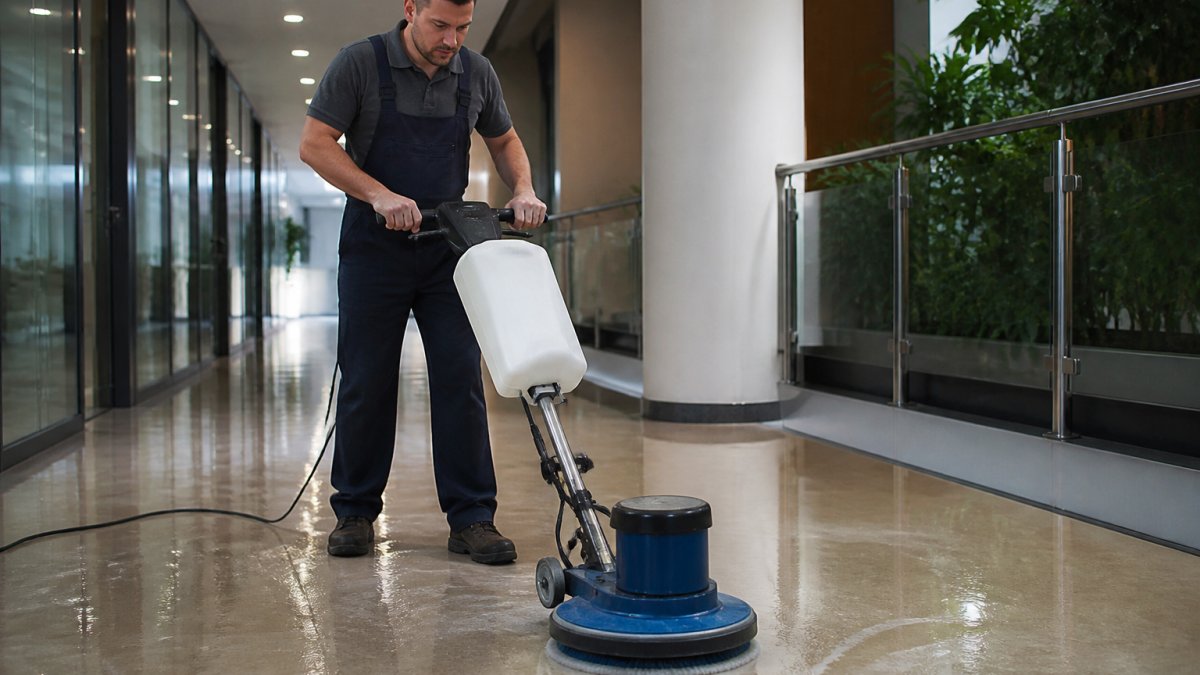
Service windows matter for occupied buildings. A crew running a floor scrubber during business hours disrupts tenants. Lock the window down in writing, then hold both sides to it.
How to Use a Commercial Cleaning Service Level Agreement Template
A commercial cleaning service level agreement template is a starting document you customize, not a form you sign as-is. Templates save time, but blind copying is how bad contracts happen.
Work through the template in this order: scope, schedule, responsibilities, standards, remedies. Then cut anything that doesn't apply to your site.
The sections below are the ones most templates get thin. Those are the ones to strengthen.
Client and provider responsibilities
Responsibilities split cleanly into two lists. Get both in writing.
Provider responsibilities:
- Supply labor, equipment, and approved chemicals
- Follow the task list and schedule
- Report issues within an agreed response time
Client responsibilities:
- Provide access, keys, and alarm codes
- Clear personal items and fragile equipment before service
- Maintain working utilities (water, power)
A common mistake is leaving supplies undefined. Who buys the floor finish? Who stores it? Nail that down or you'll have a gap in coverage.
Payment terms, renewal, and termination
Payment terms cover invoicing cycles, due dates, and late fees. Net 30 is common for commercial work, but confirm it in the contract rather than assuming.
Renewal and termination terms protect both sides:
- Contract duration and auto-renewal language
- Notice period to cancel (30 or 60 days is typical)
- Termination for cause versus convenience
Watch out: auto-renewal clauses with short cancellation windows trap clients. Read that clause twice before signing.
Building a Commercial Floor Cleaning Checklist by Zone
A commercial floor cleaning checklist works best when it's organized by zone, not by task type. Crews move through a building room by room. Your checklist should match how they actually work.
Break the property into zones: entryways, restrooms, break rooms, offices, hallways, and high-traffic corridors. Assign tasks and frequency to each zone.
Hard floors: VCT, tile, and natural stone
Hard floors need the most detail because methods vary so widely. VCT takes finish and stripping cycles. Tile and grout need scrubbing and mildew treatment. Natural stone needs pH-balanced products only.
Build the checklist around three tiers:
- Daily: dust mop, spot mop, remove debris
- Weekly: damp mop, edge cleaning, grout spot treatment
- Periodic: stripping, sealing, deep grout cleaning
For carpets, upholstery, and stone care specifically, our guide on professional carpet cleaning vs DIY rental compares methods, drying time, and long-term carpet life.
Carpet, upholstery, and high-touch surfaces
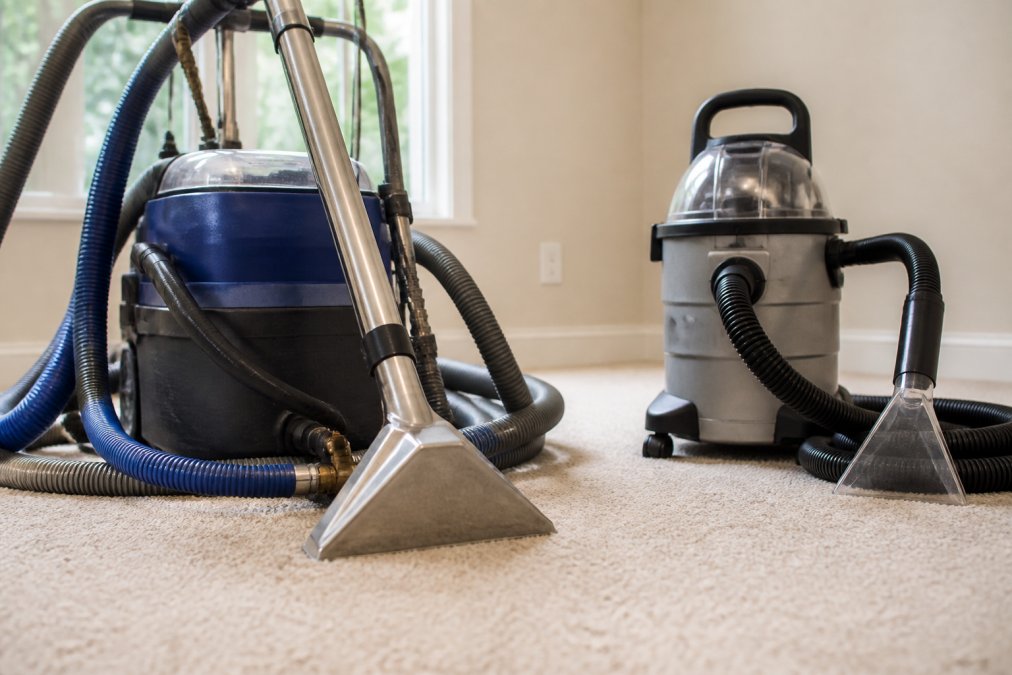
Carpet and upholstery need extraction, not surface cleaning. Deep extraction pulls soil from the base of the fibers. Surface cleaning just moves dirt around.
High-touch surfaces belong on the same checklist. Door handles, light switches, elevator buttons, and handrails collect grime fast.
Waste management and restroom sanitation round out the zone list. Both carry health protocol requirements that belong in writing.
Floor-Specific Service Standards and Method Compatibility
Most floor cleaning SLAs stop at "mop and buff." That is not a standard, it is a task. A floor-specific standard tells the provider what the surface must look like, feel like, and test like after service, and it tells the client what to reject. This is the section competitors leave thin, and it is the one that prevents the most disputes.
Define measurable acceptance criteria per floor type
Write one row per floor type with four columns: appearance, residue, slip risk, and finish. Keep the language observable so an inspector can score it without arguing.
- VCT and vinyl plank: uniform sheen with no scuff marks, no visible mop streaks, no tacky film underfoot, and a finish coat that is intact at edges and corners. Slip risk is controlled by using finish rated for the manufacturer's coefficient-of-friction guidance, not by applying more product.
- Ceramic and porcelain tile: grout lines free of dark soil and mildew, no standing water in joints, no haze from cleaner residue, and dry surfaces within the service window. Slip risk is highest on glazed tile when rinse water is left behind, require a rinse and dry pass.
- Natural stone (travertine, granite, slate): no etching, no dull spots, no acidic cleaner residue, and a pH-neutral cleaner only. Stone is the surface most often damaged by the wrong product, so name approved cleaners in the agreement.
Lock down methods, chemicals, and dilution
Method compatibility is where damage happens. Put the approved method, chemical family, and dilution ratio in the SLA so a substitute crew cannot improvise.
- VCT: burnish between finishes, strip and re-finish on a defined cycle, and use finish and stripper from the same system so layers bond.
- Ceramic tile: scrub with a neutral or alkaline cleaner, then rinse and extract. Grout gets a dedicated treatment, not the same mop water.
- Natural stone: pH-balanced stone cleaner only; no acidic products, no vinegar, no ammonia.
Require the provider to submit a chemical list with Safety Data Sheets before the first service and to notify the client before any substitution. Reference EPA Safer Choice standards when selecting products, and note any site-specific restrictions such as fragrance-free requirements in occupied buildings.
Separate routine from periodic floor care
Routine cleaning and periodic restoration are different services with different standards, schedules, and approval rules. Mixing them is how clients end up paying for a strip-and-wax that was never scheduled.
- Routine: dust mop, damp mop, spot clean, burnish as needed, covered by the base fee.
- Periodic: stripping, sealing, refinishing, polishing, grout deep-clean, and carpet extraction, scheduled on a defined cycle (quarterly, semiannual, or annual) and priced or approved separately.
Put the periodic cycle in the SLA with a notice requirement before the work is performed, so the client can approve access and budget. This is the lifecycle distinction most agreements blur, and clarifying it protects both sides.
Cleaning Service SLA KPIs That Actually Measure Performance
Cleaning service SLA KPIs are the numbers that prove the work happened and met standard. Without them, quality is a matter of opinion.
Use a small set of measurable KPIs:
- Inspection pass rate per zone
- Response time for issue reports
- Task completion rate against the schedule
Keep the list short. Five well-tracked KPIs beat twenty nobody checks.
Inspection scoring and acceptance thresholds
Inspection scoring converts "looks clean" into a number both sides accept. Use a simple 1-5 scale per item and set a passing threshold.
| Score | Meaning | Action |
|---|---|---|
| 5 | Exceeds standard | None |
| 4 | Meets standard | None |
| 3 | Minor issues | Note and monitor |
| 2 | Below standard | Corrective action required |
| 1 | Fails standard | Re-clean and credit review |
Set the acceptance threshold at 4 or higher per zone. Anything below triggers the corrective action process.
Using a Commercial Cleaning Inspection Checklist for Quality Assurance
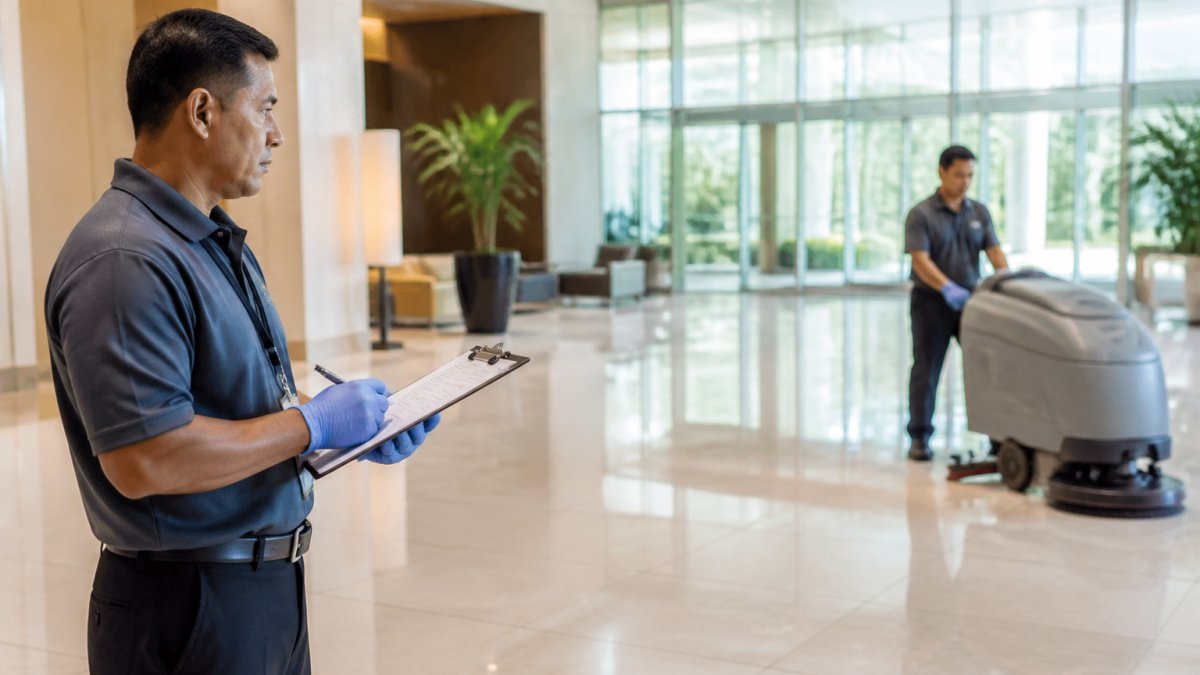
A commercial cleaning inspection checklist is the tool that turns a service agreement into an enforceable quality system. Inspectors score zones against the same standards written in the contract.
Run inspections on a fixed cadence. Weekly spot checks and monthly full inspections catch drift before it becomes a complaint.
Issue reporting, corrective actions, and service credits
Issue reporting needs a clear path and a clock. Define who reports, how, and within what response time.
The corrective action process should include:
- Written notice of the deficiency
- A fix window (24 to 48 hours for most issues)
- Re-inspection after the fix
Escalation timelines keep small problems from becoming contract disputes. Put them in the agreement, not in a side conversation.
OSHA's cleaning and maintenance safety guidance is worth citing for safety requirements in the agreement, especially for chemical handling and slip hazards.
Request a Floor Care Assessment for Your Property
The gap between a good SLA and a bad one shows up in the floors.
Radiance Glow HSC builds floor care around measurable results. Our deep extraction method pulls soil from carpet fibers rather than pushing it around.
You can explore our full range of hard surface cleaning services to see what fits your property, or contact us to book an appointment and get a free quote.
Frequently Asked Questions
What should a commercial cleaning service level agreement include?
A complete agreement names the scope of work, floor types covered, cleaning frequency, and the standards each surface must meet. Add client and provider responsibilities, inspection procedures, response times for issue reporting, and payment terms. A floor cleaning SLA should also state how quality is scored, what happens when a task fails inspection, and the escalation timeline for corrective action. Put the schedule and the inspection checklist in writing so both sides measure the same things.
What cleaning KPIs should be included in an SLA?
Pick KPIs you can inspect, not ones you have to guess at. Common choices include inspection pass rate, average response time to complaints, percentage of scheduled tasks completed on time, and corrective action closure time. For floor care, add surface-specific measures such as appearance scores after routine cleaning and completion of periodic work like stripping, sealing, and extraction. Keep the list short, usually four to six metrics, and tie each one to a reporting cadence so performance monitoring stays consistent.
How often should commercial floors be cleaned?
Frequency depends on traffic and floor type. High-traffic entries and restrooms often need daily attention, while office carpet may need vacuuming several times a week and deep extraction on a periodic cycle. Hard floors like VCT usually need daily dust mopping plus scheduled scrub-and-recoat work. Write the frequency into the service schedule by zone, and set separate intervals for routine cleaning versus periodic floor care so the contract covers both.
What is the difference between a cleaning contract and an SLA?
A cleaning contract sets the business terms: price, term length, renewal, and termination. A service level agreement defines how the work is measured and what happens when it falls short. In practice, most commercial floor cleaning agreements combine both. The SLA portion carries the performance standards, inspection checklist, KPIs, response times, and remedies such as service credits, which gives you a documented path when quality slips instead of a dispute.
Your floors take daily abuse, and a vague contract won't stop the wear. Get started with Radiance Glow HSC and put a floor care plan in place that holds up to inspection, season after season.